Mostrando entradas con la etiqueta Spanish Enlightenment. Mostrar todas las entradas

miércoles, 20 de agosto de 2025

From British Hispanists to the Marquis of Valdeflores’s Unknown European and Colonial Ties


British Hispanists in Debate

British Hispanism, Enlightenment Spain, and the Transatlantic Dimensions of Valdeflores

British and American scholarship has long shown a deep interest in Spanish culture in all its dimensions, with particular attention to the eighteenth century and the figure of Luis José Velázquez de Velasco, Marquis of Valdeflores . Among the many scholars who have contributed to this field, a few stand out:

  • Philip Deacon – leading British Hispanist, specialist in Valdeflores and eighteenth-century Castilian poetry; author of The Eighteenth-Century Origin of Spanish Literary History and Spain and Enlightenment.

  • Nigel Glendinning (1929–2013) – authority on the Enlightenment and Goya; author of A Literary History of Spain: The Eighteenth Century and Goya and His Critics; also wrote on Valdeflores.

  • Russell P. Sebold (1928–2014) – American hispanist, foremost authority on eighteenth-century Spanish literature, especially poetry.

  • George Ticknor (1791–1871) – Harvard scholar; author of History of Spanish Literature (1849), the first comprehensive history of Spanish literature in English, acknowledging Valdeflores as a pioneer of literary historiography.

These studies primarily examine Valdeflores in connection with the literary culture of his time —his role in major movements, his travels across Spain, his contributions as historian, antiquarian, epigraphist, numismatist, Latinist, and his involvement in the Real Academia de la Historia and the Academia del Buen GustoNaturally, these scholars came from highly prestigious universities in the United Kingdom and the United States, producing excellent and well-structured articles. However, as expected, they are specialized studies, focusing on specific areas and relying on consolidated academic literature.

What remains underexplored is that Valdeflores, as one of Spain’s major Enlightenment intellectuals, requires a fuller reassessment —one that accounts for his wider familial, social, and transnational networks.


The Wittemberg Legacy in Andalusia: New Research Carried Out in Spain

Through the exploration of primary sources and previously unknown documents, it has been revealed that, through his mother, Valdeflores descended from Juan Wittemberg Dreyers, a German who settled in Málaga in the seventeenth century and founded Wittemberg & Co., a maritime company active through his descendants until the late eighteenth century, operating routes across the Baltic, the Low Countries, France, England, and Belgium.

The Wittembergs became exceptionally wealthy, integrating into local elites, holding municipal offices, and forging ties with noble houses such as the Marquisate of Isla Hermosa and the Marquisate of Valdeflores. Some women of the clan married into powerful lineages, several of whose descendants eventually rose to the rank of Grandees of Spain —thus reaching the very pinnacle of the Spanish noble hierarchy. Remarkable, for example, is the familial connection of the Wittemberg family to the Count of Floridablanca, the chief minister to Charles III and one of the most influential figures of that period. This was an extraordinary achievement for a family of foreign origin that had arrived in Spain virtually unknown.

Valdeflores not only had dozens of cousins and uncles in this family with whom he corresponded and exchanged cultural viewpoints, but his siblings were also closely related to the Wittembergs. His niece, the Marchioness of Valdeflores, held seventeen mayorazgos (entailed estates) in Andalusia and wielded considerable influence during the Restoration. 

Despite considerable economic, political, and noble prominence, the Wittembergs developed no enduring heroic dimension—save for isolated episodes in the careers of certain seafarers—and thus slipped into historical oblivion by the mid-nineteenth century, surviving only in archival records. The striking exception is Valdeflores himself, whose resonant cultural legacy in many ways compensates for the family’s broader disappearance from historical memory.


Transatlantic Links: The Lisperguer Wittemberg Connection

In seeking noble recognition, the Wittembergs amassed extensive genealogical documentation, including certifications by heralds such as Juan Alfonso de Guerra y Sandoval. These reveal kinship with the Lisperguer (Lisperguer Wittemberg) family. Under Emperor Charles V, Pedro Lisperguer Wittemberg was dispatched to the conquest of Peru and Chile despite restrictions on foreign settlers. Meanwhile, the other branch of the family secured establishment in Spain, with documented support from Leopold I, Holy Roman Emperor.  

The Lisperguers flourished especially in Chile, with military service in the Arauco Wars, prominent roles in politics, governance, and the Church; their women often married judges, consolidating power. In Peru they allied with noble houses; in Argentina, though to a lesser extent, they secured political and aristocratic influence. The most notorious descendant was Catalina de los Ríos Lisperguer, “La Quintrala”—an encomendera infamous for her cruelty towards Indigenous people. Far from a heroic figure, she nonetheless achieved lasting notoriety. Her life has inspired hundreds of academic works, doctoral theses, novels, plays, films, and even operas. Her figure remains central in debates on gender, power, colonial violence, and the cultural imagination of Latin America.


Why This Matters for British Hispanists

Through Valdeflores one can trace a broader Euro-Atlantic reality that transcends the individual scholar: the Habsburg connections, the triangular nexus of Germany, Spain, and the Americas, and the cultural interplay across early modern Europe and the New World. After leaving Worms in 1545, Pedro Lisperguer travelled for six months with Charles V through southern Germany and the Low Countries; he then spent a decade in Andalusia as equerry to the Counts of Feria, and accompanied the young Prince Philip (later Philip II) to England for seven months, participating in key events of the period.

This hidden transnational dimension—linking Enlightenment Spain, European courts, and the colonial world—offers British scholarship fertile ground for further research, interpretation, and interdisciplinary exploration in literature, history, and cultural studies, opening opportunities for infinite resonances in universal history.


Reviews and Further Reading


THE LISPERGUER VOLUMES: LEGACY, REVIEWS AND PERSPECTIVES


martes, 23 de agosto de 2016

The Wittemberg’s: a flourishing German family in the heart of the 18th century Spain


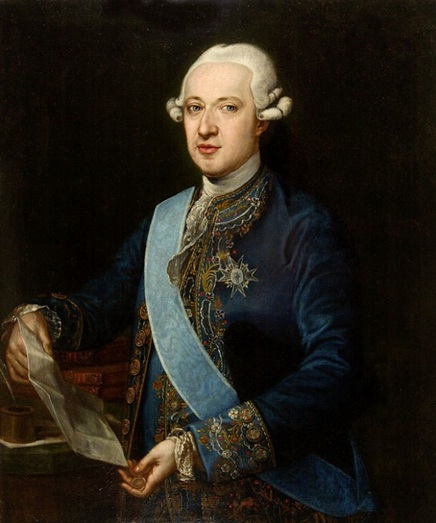
Charles the III of Spain by Anton Raphael Mengs
[Public domain],  via Wikimedia Commons


 In the eighteenth century, there were many foreign families in Spain, but few endured over time or integrated with the local population. A very special case was that of the Wittemberg family, protected by the German emperors, which was established in the Iberian peninsula for reasons of trade. It all started in 1667 with the arrival in Malaga of the German merchant Johannes Wittemberg Dreyers from Hamburg. He was a very organized man, who soon founded a thriving shipping company, whose ships roamed the coasts of France, Belgium, Netherlands, England, Northern Germany and the Baltic ports. 

    Johannes was a clever man, who was also established as a banker, buying land and property, farming, exporting wine and other products of the land, maintaining good relations with local rulers, creating a business network that spread throughout Andalusia. He quickly realized that if he wanted to succeed, he needed to integrate with the local population, while narrowing ties with their foreign peers and German partners, cultivating relationships with his headquarters in Hamburg, attracting many foreign consuls to establish in Malaga as partners of the Wittemberg company. 

In 1870 Johannes married María Arizón, a descendant of Spanish and Irish, with whom he had a large offspring. One of Johannes´son emigrated to Panama, but most of them remained and thrived in Málaga. Some of their children developed a thriving business activity, and most of them joined the Army, the Navy, or the clergy. 
Especially skillful were the women of this family, who contracted a high-rank marriages with many members of the nobility, significantly expanding the power of this family, enabling their members to occupy key posts in the Spanish government. 

As a result of their commercial activity, in a few years, this family took control of the land, owned large country farms with beautiful mansions, established prosperous international relations, got noble titles. They manage to achieve a high status and refinement. They had carriages, elaborate jewelry, fine linens, silverware, precious porcelains, delicate and elegant clothes...Their maritime company had a flourishing activity over one hundred and thirty years. 


At the end of the century their company was dissolved, but the prestige of the family continued until the late nineteenth century, enabling great social progress, achieving to become related to Spanish grandees. 


Member of this German family by his mother side was  Luis Joseph Velázquez de Velasco, Marquis of Valdeflores (1722-1772), member of the Royal Academy of History, a key figure in the early Spanish Enlightenment, whose “Geschichte der Spanischen Dichtung” was translated in 1769 by professor Andreas Dieze in Gottingen, and in 1860 Emil Hübner, member of the Die Königlich Preussische Akademie der Wissenschaften zu Berlin, took advantage of the many epigraphic gatherings of Valdeflores to form The Corpus Inscriptionum Latinarum. Velázquez, well educated and a member of many academies, was involved in the most important literary movements and cultural projects of that time. He is known to be the first who introduced the neoclassicism in Spain, and one of the youngest who undertook a scientific journey through the peninsula to gather their antiquities.


Luis José Velázquez de Velasco, marqués de Valdeflores (1722-1772).
Cuadro pintado por Enrique Jaraba en 1920. Se trata de un luneto adosado
al techo del Salón de Recepciones del Ayuntamiento de Málaga, al cual 
el cuadro pertenece. 

Another proof of the great importance of this family is that it got related to the County of Floridablanca, which was originated by Don José Moñino Redondo, later I Count of Floridablanca, one of the most important politicians of this time, secretary of state of King Charles III, and later on, of his son, Charles IV. 


Probably by Francisco de Goya (1746-1828) [Public domain],
via Wikimedia Commons

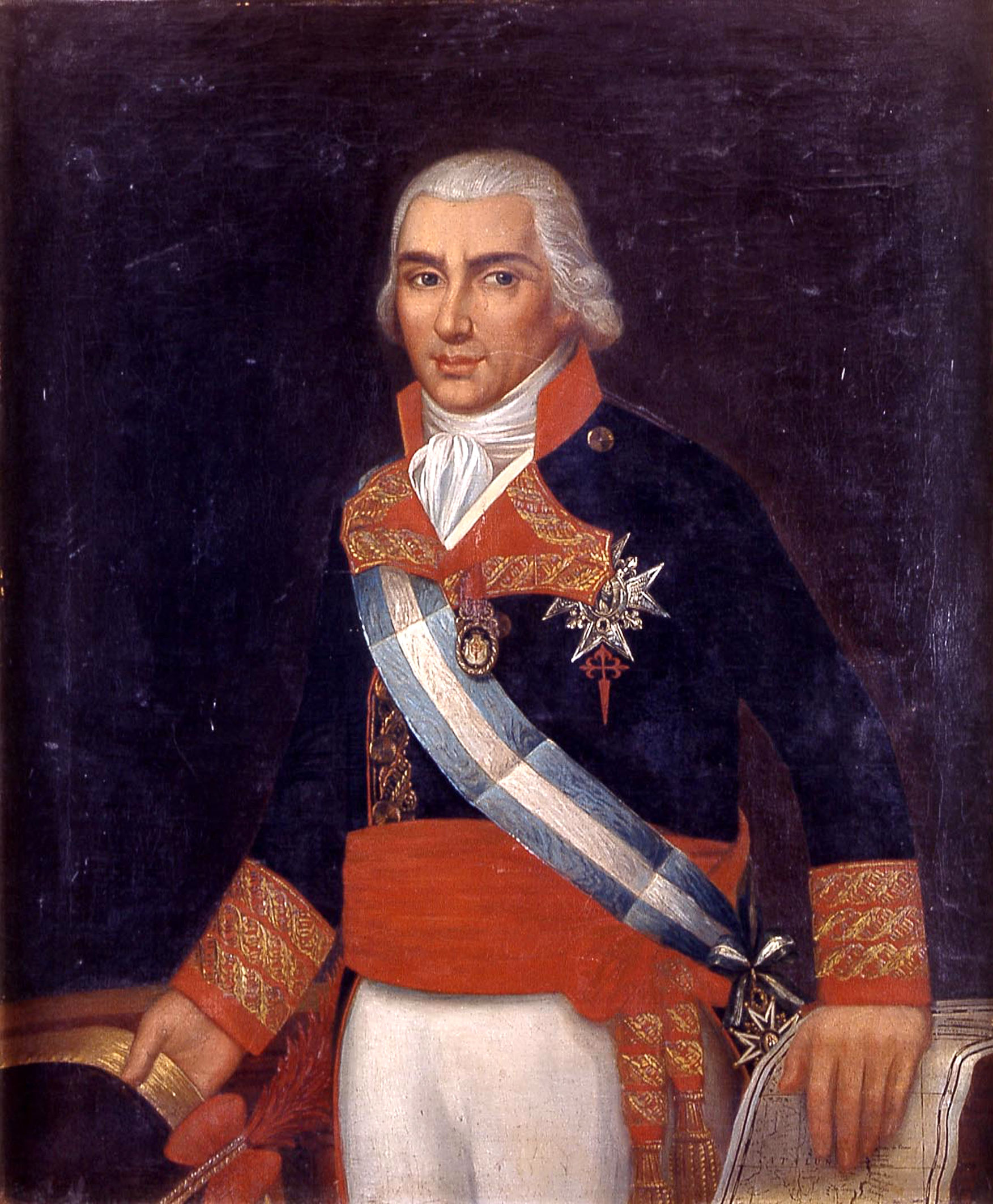
We also have the case of Juan Pedro Coronado Wittemberg, another member of this family, which fought alongside with Francisco Gravina, navy commander in chief around 1810.


See page for author [CC BY-SA 3.0 (http://creativecommons.org/licenses/by-sa/3.0)
or Public domain], via Wikimedia Commons

Thank you


If you want to write me o comment your points
of view you can do it in the following email: 


email Daniel Piedrabuena Ruiz-Tagle


The family Lisperguer Wittemberg split in two continents America (Perú, Chile and Argentina) and Europe (mainly Spain). If you are interested in the 18th century Spain, this is the work that you may consider: Los Lísperguer Wittemberg: una familia alemana en el corazón de la cultura chilena: Identidad y esplendor de la primera familia colonial de Chile. Despite the title, 60 % of this work has to do to 18th century Spain. 


I have also published a second volume focused in the 16th century Spain, fascinating too if you are studying the Spanish Empire or the Holy Roman Empire. The title is "El conquistador alemán Pedro Lisperguer Wittemberg: De cortesano de Carlos V y Felipe II a célebre conquistador de Chile"  and is available in several retailers in its digital version. Thank you. DPR.


Very recently I have also written an article about the origin of the Lisperguer family in the Atenea magazine. To read the article click here: 


The origin of Lisperguer family


Daniel Piedrabuena Ruiz-Tagle 

Don´t forget to leave your comment !!!

Thank you


Further recommended reading: 


THE LISPERGUER VOLUMES: LEGACY, REVIEWS AND PERSPECTIVES


martes, 19 de abril de 2016

El pasado alemán del marqués de Valdeflores

Luis José Velázquez de Velasco, marqués de Valdeflores (1722-1772).
Cuadro pintado por Enrique Jaraba en 1920. Se trata de un luneto adosado
al techo del Salón de Recepciones del Ayuntamiento de Málaga, al cual
el cuadro pertenece. 
      Como es bien conocido el marqués de Valdeflores fue una figura icónica de la Ilustración española. Lector desde su más tierna infancia, en su juventud realizó estudios jurídicos, filosóficos y escolásticos logrando una gran erudición. En 1752 viajó a Madrid, contactó con Ignacio Luzán, quien lo introdujo en la Real Academia de la Historia. Fue uno de los más jóvenes que realizó un viaje por Península Ibérica para catalogar sus antigüedades. También uno de los primeros que introdujo el neoclasicismo en España. 

      Hoy podríamos definir a Valdeflores como un polymath: fue un historiador, literato, poeta, latinista, arqueólogo, anticuario, epigrafista, numismático, académico....Todo ello ha sido estudiado por muchos historiadores y académicos y no queda ninguna duda al respecto. Sin embargo, lo que es una gran novedad es el pasado alemán de Luis José, lo que abre un gran pórtico para una nueva interpretación de su figura.

Efectivamente, se sabe que por parte de padre el marqués pertenecía a las familias más linajudas de Málaga y de toda Andalucía. Pero por parte de madre descendía de la familia Wittemberg, una familia alemana que se había establecido en Málaga como comerciantes en el último tercio del siglo XVII. El bisabuelo del erudito andaluz se llamaba Johannes Wittemberg Dreyers y vino en torno a 1667 a Málaga, contando sólo con 14 años de edad, al cuidado de Rodrigo Elers, cónsul en Málaga por S.M. de las ciudades hanseáticas y provicias obedientes de Flandes. Johannes pronto se independizó de su curador y formó su propia compañía marítima, dedicándose al tráfico internacional de mercancías, al parecer como un factor de sus socios en Hamburgo. 

   Poco después Johannes se casaba con María Arizón, que procedía de un matrimonio mixto (Arizón procedía de Irlanda y se latinizó a partir de Harrison). De esta unión nació entre otros hijos María Wittemberg Arizón, nacida en Málaga el 8 de junio de 1674, casada el 3 de julio de 1701 con don Alonso Cruzado Zatico, regidor perpetuo de Málaga, nacido el 14 de enero de 1677. A su vez de este matrimonio nació entre otros doña Margarita Cruzado Wittemberg, bautizada en Málaga el 16 de diciembre de 1705, casada el 19 de noviembre de de 1721 con don Francisco Pascual Zacarías Velázquez de Angulo y Rentero, capitán de milicias y regidor de Málaga, entre otros muchos cargos y títulos, como es el de I marqués de Valdeflores y Señor de Sierra Blanca. A su vez de esta unión procede nuestro ilustre biografiado, Luis José Velázquez de Velasco, II marqués de Valdeflores ( 1722-1772).

  La relación de Luis José con la familia Wittemberg fue mucho más que genealógica. No sólo su madre fue una Wittemberg, sino que su hermano menor Francisco contrajo matrimonio con otra Wittemberg, su prima doña Juana Wittemberg Cotrina, de cuya unión procede una de las familias más ricas de toda Córdoba en el siglo XIX. Asimismo, existen evidencias que sugieren que Luis José mantuvo en su juventud una gran proximidad con su tío Juan Joseph Wittemberg Aguilar, racionero (según otras fuentes dean) de la catedral de Málaga. No sólo entre sus escritos se han encontrado papeles de su tío, sino que mantuvo con él una comunicación epistolar durante años, intercambiando numerosas cuestiones filosóficas y de historia natural y debatiendo ideas científicas, como la cuestión de la refracción de los rayos de la luz.

   Asimismo, se conserva correspondencia de Luis José con otro de sus tíos, don Joseph Wittemberg Aguilar, hermano del anterior y por entonces propietarios de una de las más prósperas compañías marítimas de Málaga.

    En el campo de las realizaciones intelectuales resulta paradójico pensar, que desconociendo su origen, la figura de Luis Joseph Velázquez provocó una estimable seducción entre los círculos intelectuales alemanes. Tras la publicación en 1755 de sus Orígenes de la poesía castellana, la obra tuvo una inmediata repercusión internacional. Desde luego se sabe cómo Velázquez era leído en Leipzig. Su obra aún cobró mucho más interés tras la traducción que hizo el profesor Johan Andreas Dieze en Gottingen en 1769 con el título de Geschichte der Spanischen Dichtung.

Un siglo después de la muerte de Velázquez, Emil Hübner, miembro de la Academia Imperial de Berlín, utilizó las colecciones epigráficas del erudito andaluz para conformar el volumen II de su Corpus Inscriptionum Latinarum dedicado a Hispania. Todo esto indica que si en estos foros intelectuales alemanes hubieran tenido conocimiento del pasado alemán de Velázquez, el interés por su obra hubiera sido, si cabe, aún mucho mayor.

     Para poder comprender en profundidad la enorme entidad de la familia Wittemberg en Málaga y la importancia de sus operaciones comerciales, sus casamientos, etc, resulta imperativo leerse el libro que acabo de publicar "Los Lisperguer Wittemberg: una familia alemana en el corazón de la cultura chilena: Identidad y esplendor de la primera familia colonial de Chile".


A pesar de su título esta obra tiene muchísimos presupuestos españoles, fuentes y escenarios situados en España.

Para acceder al libro disponible en Amazon pulse aquí:

Los Lisperguer Wittemberg: una familia alemana en el corazón de la cultura chilena

Asimismo he publicado un artículo en la prestigiosa Revista Atenea que puedes leer en el siguiente enlace: 


Asímismo he escrito un libro muy documentado sobre la etapa pre-americana del célebre conquistador alemán Pedro Lísperguer. Para adquirirlo haz clic en el siguiente enlace: 


El conquistador Pedro Lísperguer


         Muchas gracias por tu interés y no dejes de comentar. 

Daniel Piedrabuena Ruiz-Tagle