Mostrando entradas con la etiqueta Spanish empire. Mostrar todas las entradas

viernes, 3 de octubre de 2025

Will La Quintrala Become the New Quixote?


The Lisperguer Family and La Quintrala: New Narrative Opportunities in an Era of Euro-Atlantic Academic Exchange

La Quintrala: From Colonial Archives to Cultural Myth

Since the great historian Benjamín Vicuña Mackenna rescued her from the dusty colonial archives, La Quintrala has been treated like an old gold mine whose veins have been almost exhausted. From her figure, a literary topos has been extracted—perverse or not—that has invaded nearly every field of knowledge: history, literature, psychology, sociology, feminism, indigenismo.

The motifs repeat themselves endlessly: colonial violence, the oppression of elites over Indigenous peoples, unchecked power, demonized eroticism, symbolism and witchcraft, the female archetype, myth and culture.

A Saturated Theme: La Quintrala in Literature and the Arts

The literary and artistic expressions inspired by La Quintrala are immense, both in Chile and internationally: poetry, novels, monographs, doctoral theses, conferences, radio, cinema, television, and even operas. Yet a certain fatigue has set in—always the same topics, with little variation.

Do we already know everything about Catalina de los Ríos Lisperguer, commonly known as La Quintrala? It is worth remembering that she was only one member of a larger and more imposing lineage: the Lisperguer Wittemberg family.

The Lisperguer Wittemberg Legacy Beyond Chile

Here enters the monumental work of Chilean-born historian Daniel Piedrabuena Ruiz-Tagle, now based in Spain. His research, embodied in two volumes of over 1,400 pages, shifts the focus: not only on Catalina, but on the entire Lisperguer Wittemberg clan.

The first volume deals with the courtier and later conquistador Pedro Lisperguer.

The second is marked by a striking cover: a golden imperial eagle on a black background, evoking the grandeur and solemnity of the Holy Roman Empire. Even the publisher’s logo—Booksideals, with a man gazing through a telescope—suggests discovery and intellectual exploration.

A Work of “Grandeur that Enchants and Mesmerizes”

The volumes have been placed in the Rare and Valuable Collection of Chile’s National Congress Library, a testament to their significance.

In their pages, the author writes with authority, perspective, and refinement. There is a grandeur that enchants and mesmerizes. His voice is authentic, passionate, and free of disguise. On the back cover, Dr. Isidoro Vázquez de Acuña, Secretary of the Chilean Academy of History, describes Piedrabuena as one of “the chosen in the history of themselves,” calling his work “magna,” born from a sincere and passionate love for his roots—a love that impelled him to construct a unique Hispano-American and European investigation.

Hidden Sources and a Surprising Discovery

The strength of these volumes lies in their use of primary sources: documents never before seen in Euro-Atlantic repositories, manuscripts preserved in specialized rooms, family testaments as last messages before death, forgotten notarial records.

The author even studies tombstones and genealogies to reconstruct kinship lines. He uncovers an unexpected branch: the Wittemberg family in Spain, cousins of the Lisperguer, who held great political, economic, and social influence under the protection of Emperor Charles V and later Leopold I.

Pedro Lisperguer: A European Courtier Before the Conquest

The research reveals the European past of Pedro Lisperguer, grandfather of La Quintrala. His travels with the Emperor through southern Germany and the Low Countries brought him into contact with the most advanced intellectual currents of sixteenth-century Europe.

He spent a decade in Spain at the Casa de Feria, a center of intense cultural life, and later accompanied Prince Philip to England, into the court of Mary Tudor. This portrait reveals a far more cosmopolitan figure than local historiography had imagined.

A Family Between Spain, Germany, and the Atlantic World

The Spanish branch, originating with Johannes Wittemberg Dreyers in the eighteenth century, founded in Málaga a powerful maritime company with routes across Europe and the Baltic. From this line descended the Marquis of Valdeflores, one of the most distinguished scholars of the Spanish Enlightenment.

These volumes by Piedrabuena have been catalogued in some of the world’s most prestigious libraries—across the United States, the United Kingdom, Germany, Spain, and Latin America—and reviewed in leading academic journals.

Nationalism and Cosmopolitanism: An Open Debate

The work, with its strong documentary foundation, opens vast opportunities for literary criticism, gender studies, and semiotic approaches. It breaks with provincialism and proposes a Euro-Atlantic axis that brings together German historians, Spanish scholars, Latin Americans, and North Americans.

This inevitably stirs tensions: Chilean versus Spanish nationalism, U.S. interest in Latin American topics versus the British gaze on Iberian studies. But it also enriches the field with new characters, diverse settings, and international cooperation.

Conclusion: La Quintrala as a Universal Myth

In an interconnected world such as ours, this new exposition of the past opens a fertile field of interpretation, blurs borders, tightens bonds among historians, writers, and sages of many nations, and opens an infinite door to intellectual curiosity—whose repercussions are so vast that they intimidate even the brightest minds.

Will La Quintrala then become the new Quixote? Time, and readers, will tell.


Recommended Works

Pedro Lisperguer Wittemberg: From Courtier of Charles V and Philip II to Famous Precursor of Chile
ISBN 978-84-946713-3-3

The Lisperguer Wittemberg Family: A German Lineage at the Heart of Chilean Culture
ISBN 978-84-946713-4-0

Note: Although their titles refer to Chile, these works are based roughly 80% on Spanish, German, European, and Euro-Atlantic sources and contexts.

viernes, 19 de septiembre de 2025

La Quintrala in the Arts: From Colonial Legend to Universal Icon


Terra incognita: Terra australis: Terra universalis

The Lisperguer family has transcended time and archival records to become one of the most studied and debated lineages in Chile’s colonial history. What began as a genealogical investigation turned into a cultural phenomenon, where history blends with legend and myth becomes part of the collective imagination.

Its most celebrated figure, Catalina de los Ríos y Lisperguer —La Quintrala—, is today one of the most iconic women in Latin American history. Through her, the Lisperguer name has crossed borders and inspired reflections on power, violence, gender, and morality, resonating in academic studies, literature, performing arts, and mass media.

1️⃣ Literature and Poetry

Since colonial times, the Lisperguer name has appeared in chronicles, satirical poems, and travelers’ accounts. However, it is in modern literature where La Quintrala has become a symbol of transgression and defiance of patriarchal norms. Authors have compared her figure to universal archetypes: the “Chilean Medea” and a “female Quixote” who struggles against her world and against herself.

2️⃣ Theatre and Opera

Chilean theatre has brought the Lisperguer legend to the stage on many occasions, with the National Theatre of Chile being the scene of productions that combine historical rigor with drama. Opera has also echoed her figure in lyrical tragedies that blend myth, religion, and redemption. Danish composer Lars Graugaard, with more than 150 works and an extensive international career, premiered in 2004 the opera La Quintrala for five singers and interactive computer, with performances in Copenhagen, Hannover, Berlin, and Piteå. The work, the result of a European commission, explores the figure of Catalina de los Ríos Lisperguer, descendant of the German conqueror Pedro Lisperguer. Its music combines tradition and technology, opening new scenic readings of the Chilean colonial myth.

3️⃣ Television and Soap Operas

Television has popularized the myth of La Quintrala through Chilean productions in miniseries and telenovela format, portraying her sometimes as a relentless villain, sometimes as a misunderstood woman. Her name has become synonymous with a woman of formidable character in popular imagination. In addition, the family legend has inspired numerous historical and fictional novels, ranging from romantic tales to deep psychological studies, consolidating La Quintrala as one of the most represented female characters in Chilean and Latin American narrative.

4️⃣ Film and Documentaries

Film and documentary have sought to capture the complexity of the character, from romantic approaches to historically documented ones. These productions allow for a dialogue between historiography and audiovisual fiction. Given the current spread of the character, it would not be surprising if, in the not-so-distant future, a major Hollywood-style production were made, in the style of La Casa de los Espíritus (with Meryl Streep, Jeremy Irons, and Antonio Banderas) or Evita (with Madonna and Antonio Banderas), which could bring the story of La Quintrala to international audiences on an unprecedented scale, definitively consolidating her as a universal myth.

5️⃣ Essays, Articles, Conferences and Radio

The Lisperguer family has been the subject of academic essays, monographs and historical symposia. Universities and academies have dedicated study days to exploring their role in colonial elites. From a feminist critical perspective, her figure has been re-examined as a sociological case study, a symbol of resistance, and a literary archetype.

6️⃣ Conclusion – A Living Myth

Today, the Lisperguers are much more than just a surname in colonial records: they are a living myth that inspires poets, filmmakers, historians, and artists. Their story continues to provoke debates about identity, colonial legacy, and the way art transforms historical memory into universal culture.

7️⃣ New Opportunities and Current Perspectives

The research of Daniel Piedrabuena Ruiz-Tagle has opened a new stage in the study of the Lisperguer family, shifting the focus from an exclusively local perspective to a transatlantic and European context.

Documents found in the National Library of Spain and the Royal Academy of History allow the reconstruction of the life path of Pedro Lisperguer Wittemberg in the courts of Charles V and Philip II and his journey to the New World, providing new evidence about his identity and family networks.

This work enriches the study of the Habsburg Empire, the circulation of ideas in the first globalization and opens new avenues for comparative elite history, gender studies and scientific genealogy.

This new research opens new opportunities for artistic representation, providing material for new plays, novels, film scripts, and series that can explore the figure of La Quintrala with a less local and more universal perspective, in dialogue with the great narratives of global cultural history.


Recommended reading for a better understanding of this blog:

El conquistador alemán Pedro Lísperguer Wittemberg: de cortesano de Carlos V y Felipe II a célebre precursor de Chile

Los Lísperguer Wittemberg: una familia alemana en el corazón de la cultura chilena

martes, 19 de agosto de 2025

Juan Alfonso de Guerra y Sandoval: The King of Arms Who Forged the Lisperguer-Wittemberg Legend


Introduction – The Power of a King of Arms in the Construction of Lineages

In 17th and 18th century Spain, genealogy and heraldry were not merely historical studies, but tools of power. At a time when noble titles opened doors in court, the army, and the church, having an official certification of arms could mark the difference between being a simple hidalgo or being recognized as part of the high European nobility.

Within this context emerged the figure of Juan Alfonso de Guerra y Sandoval, King of Arms and royal chronicler, whose work was decisive in the creation, legitimization, and sometimes magnification of lineages, among them the Lisperguer-Wittemberg, a German-Hispanic-American family whose influence extended from Germany to Chile and Peru.


Who Was Juan Alfonso de Guerra y Sandoval?

Juan Alfonso de Guerra y Sandoval (1672–1753) was one of the last great Kings of Arms of the Spanish monarchy. These royal officials were tasked with:

  • Registering coats of arms and lineages.
  • Certifying nobility for access to military orders, royal offices, and ecclesiastical benefits.
  • Serving as official historians of noble families.

Gifted with a vast genealogical library inherited from his father, Guerra y Sandoval worked for Philip V and left numerous manuscripts preserved today in the National Library of Spain and other archives. His certifications directly influenced the construction of prestige for many families, especially those with foreign ancestry seeking to reaffirm their nobility in Spain and the Americas.


The Lisperguer-Wittemberg: A German Lineage in Hispanic Lands

The Lisperguer-Wittemberg family was born from the union of a German lineage from Worms and a branch established in Andalusia during the Habsburg imperial expansion. Pedro Lisperguer, protected by Emperor Charles V, traveled to the Americas and founded one of the most influential families of the Viceroyalty of Peru and the Kingdom of Chile.

Centuries later, his descendants in Spain and the Americas sought documentary proof of their noble origin, especially after the loss of archives in Worms due to fires and wars. It was then that Kings of Arms such as Guerra y Sandoval played a key role by issuing certifications of nobility and arms that linked the Lisperguer-Wittemberg to German ducal houses, possibly Saxony or Württemberg, thus reinforcing the myth of a lineage connected with German emperors.


How Guerra y Sandoval “Constructed” the Myth

The King of Arms did not invent stories out of thin air, but gave official and prestigious form to oral traditions, genealogical clues, and sometimes fragmentary documents. In the case of the Lisperguer-Wittemberg, Guerra y Sandoval:

  • Gathered testimonies of kinship between the Spanish and American branches.
  • Authenticated coats of arms and blazons that reinforced the supposed link with German ducal houses.
  • Issued nobiliary certifications circulated in Spain, Chile, and Peru, serving as a foundation for later genealogists.

These certifications granted legal and social validity to a lineage that had conquered the Americas and that, centuries later, sought to connect its memory with the great European nobility. Thus, a myth born in colonial oral tradition was inscribed into official documentation, lasting to this day.


Impact on Chilean Historiography and Culture

Thanks to these certifications, the Lisperguer family consolidated its legendary image in Chile and Peru, transmitted by genealogists such as Juan Luis Espejo and Luis de Roa y Ursúa. This myth reached popular culture through:

  • The figure of La Quintrala, direct descendant of Pedro Lisperguer, protagonist of novels, plays, TV series, and feminist studies.
  • Genealogical trees and heraldry reproduced in monographs, lectures, and academic articles.
  • The historical narrative of a German-Spanish lineage that became one of the most emblematic colonial families of Spanish America.

Conclusion: Myth, Power, and Legitimacy

Juan Alfonso de Guerra y Sandoval was not just a royal official, but an architect of lineages, capable of bestowing antiquity and brilliance upon families seeking to consolidate their power in Spain and the Americas. In the case of the Lisperguer-Wittemberg, his certifications helped weave a noble legend that endures to this day, blending real events, oral memory, and ambitions of prestige.

His work is key to understanding how genealogy, politics, and social mythology intertwined in the construction of the colonial elites of Spanish America.


Reviews that reference the works that explore
 these subjects in greater depth
: 


THE LISPERGUER VOLUMES: LEGACY, REVIEWS AND PERSPECTIVES


miércoles, 13 de agosto de 2025

THE LISPERGUER VOLUMES: LEGACY, REVIEWS, AND PERSPECTIVES


The Lisperguer Volumes: Legacy, Reviews, and Perspectives

International Reviews

Cristián Le Blanc (Retired Diplomat) – five stars. Reviewed in the United States on April 21, 2021.
I wish to express my admiration for the profound work carried out by Mr. Daniel Piedrabuena Ruiz-Tagle in his two outstanding books, which I have had the opportunity to read: Los Lisperguer Wittemberg: una familia alemana en el corazón de la cultura chilena – identidad y esplendor de la primera familia colonial de Chile, as well as El conquistador alemán Pedro Lisperguer Wittemberg: de cortesano de Carlos V a Felipe II a célebre precursor de Chile.

Thanks to these two scholarly works, we now have—for the first time—an in-depth view of the true history of this prominent family that arrived in Chile with Don Pedro the Conqueror. Even Benjamín Vicuña Mackenna did not succeed in clarifying certain aspects that the author now illuminates with great erudition.

The information presented is the result of exhaustive research and first-hand historical sources, conveyed with clarity and an engaging style while never losing rigor or detail. Through his work, Mr. Piedrabuena Ruiz-Tagle has shed light on the family’s trajectory—its origins and development in Germany, later in Spain, and finally in Chile.

Eugenio Ovalle – five stars. Reviewed in the United States on February 16, 2021.
A great book about a family leaving its homeland to settle in another country, facing all the challenges along the way—a story shared by many families over the centuries who set out to build a new life abroad.

Garcia Thierry – five stars. Reviewed in France on November 18, 2023.
Historically interesting and well-written, with abundant detail—a reference work on the history of this family over the centuries.

Back-cover Reviews

“The substantial volume, the monumental work, and the sincere and passionate affection of its author for his roots is the love that moved him to construct this Hispano-American and European work… ‘the chosen ones’ in the history of themselves.”
— Dr. Isidoro Vázquez de Acuña, Secretary of the Chilean Academy of History. Revista de Estudios Históricos, Chilean Society of History and Geography.

“The author places us before a subject of clear historical importance for Chileans. It is enough to recall that from the Lisperguer family descends the figure who belongs to Chile’s legendary collective memory, La Quintrala.”
— Reynaldo Lacámara, former president of the Chilean Writers’ Society (SECH). Memory as Origin and Task.

“This is undoubtedly a work that transcends mere documentary value (no small matter) and situates itself at the heart of many Chilean themes still traceable today. The history of the Lisperguer family—emphasizing their ability to integrate into new settings and their remarkable social ascent—reveals their multicultural nature and hybrid imprint, which can well be read as a major metaphor for the two centuries during which Chile developed as a nation. Mr. Piedrabuena’s work is, without a doubt, remarkable: not only rigorous but also passionate—a combination rarely found in the field of history, where one often seems to preclude the other.”
— Eleonora Finkelstein, RIL Editores.

Note to the Discerning Reader

Taking advantage of this occasion, I would like to share my thoughts on Volume I, El conquistador alemán Pedro Lisperguer Wittemberg: de cortesano de Carlos V a Felipe II a célebre precursor de Chile, so that the reader may fully appreciate the intellectual effort required to carry out a project of this nature—the result of seventeen years of intense historical research.

Some time ago, an isolated rating—almost certainly motivated by personal or political bias (events from the 16th century should be approached within their historical context, rather than through the prism of contemporary political allegiances)—significantly reduced the book’s visibility on Amazon. Social discord in certain environments, arising from polarized ideological positions, can sometimes produce distortions in the public reception of a work.

Setting aside this interpretative framework, this book presents for the first time the complete European background of Pedro Lisperguer Wittemberg, a German courtier who served in the most influential courts of the 16th century before crossing to the Americas. It brings together a wide and carefully curated collection of sources, including unpublished archival documents from specialized repositories and rare materials scattered across various publications—such as the official permits for travel to the New World.

Written with passion, creativity, and historical rigor, it seeks to merge documentary precision with a compelling narrative. Far beyond the natural subjectivity any author may have, the work contains a documentary and archival treasure that makes it valuable in itself and may be greatly appreciated by international researchers seeking broader connections. The life of Pedro Lisperguer mirrors, in many respects, the trajectory of Charles V and Philip II. To disregard it is to overlook monarchs of immense significance in world history.

For all these reasons, I urge the constructive reader to approach this work free of preconceived frameworks that might hinder a generous appreciation of it—leading to a responsible and fair evaluation, thereby contributing to enrich the dialogue on transatlantic and European history.

The entirety of this blog, in its different expressions and approaches, may serve to foster a kinder and more well-founded perception of what I am trying to convey.

P.S. I am pleased to note that in this volume, which had for a long time been affected by an isolated low rating, a new five-star review has recently been added, offering a more balanced perspective on its reception.

Thank you,

Daniel Piedrabuena Ruiz-Tagle
Currently working on a study of an 18th-century Spanish polymath.


Reading recommendation: 

Donation to the National Library of Spain


martes, 12 de agosto de 2025

Shared Ties between the Lisperguer and Wittemberg Families: A German Lineage that Crosses Continents


The Lisperguer-Wittemberg Lineage: A German Family Between Two Worlds, Chile and Spain

In the colonial history of Chile and Peru, few lineages spark as much interest as that of the Lisperguer family , whose name echoes through archives, chronicles, and legends. Yet, after years of research, a little-known but crucial connection emerges: the deep ties between the Lisperguer and Wittemberg families , a surname laden with noble associations in 16th-century Europe.

Researcher Daniel Piedrabuena Ruiz-Tagle , after more than a decade exploring archives and libraries in Spain, with documentary collaborations from Germany and Latin America , has gathered new evidence proving that the two families not only shared German origins but also maintained close ties even after Pedro Lisperguer departed for the New World under the protection of Emperor Charles V .

A Lineage with Roots in Germany

Pedro Lisperguer, born in Worms around 1530, was the son of Peter Birlinger and Catalina Lisperg , both linked to the municipal elite and the city council. Unpublished documents indicate that his family had close connections with German ducal houses , which may explain accounts linking him to the Dukes of Saxony . These rumors, spread in Chile since colonial times, reinforced the image of a conquistador of noble blood, legitimizing the prestige of his descendants.

Current research makes it possible to trace genealogical bridges between the Lisperguer and the Wittemberg families, a German family that decades later would settle in Spain with great social and economic success.

The Wittemberg Branch in Spain

The Wittembergs arrived in Andalusia in the 17th century and achieved a remarkable integration with the local nobility. Several generations held prominent positions, and some of their descendants obtained titles of Grandee of Spain while running a thriving maritime company that operated for more than 130 years, linking Spanish ports with the Baltic and the rest of Europe.

Most revealing are the nobiliary documents and heraldic certifications of the Wittemberg family, which explicitly state their kinship with the Lisperguers , underscoring a shared memory of German and Catholic origin , backed by the imperial protection of Charles V and his successors.

Wittemberg in the Americas: A Name of Prestige

Many descendants of Pedro Lisperguer , throughout the 16th and 17th centuries, proudly bore the Wittemberg surname in Chile and Peru. This was no coincidence: it reflected the intent to preserve the bond with German nobility and to reaffirm a lineage that transcended borders, uniting Europe and America under the same heritage .

Numerous colonial records, wills, and genealogical trees preserved in Peru, Chile, and Argentina show members of the family using the surnames Lisperguer and Wittemberg interchangeably, as a way to link the glory of their European ancestors with their privileged status in the New World.

A Myth That Becomes History

For centuries, the origins of the Lisperguers were fertile ground for legend: they were linked to German emperors, Dukes of Saxony, and Central European royal houses. Piedrabuena’s new research helps separate myth from reality, offering unpublished documentary evidence confirming a German-Spanish family network that reached its peak in Chile and Peru.

This connection between the Lisperguers and the Wittembergs not only enriches our understanding of the Chilean colonial aristocracy but also invites us to rethink how German blood and Spanish imperial ambition intertwined to create one of the most influential and controversial families in Hispanic American history.

A Story That Lives On

The legend of the Lisperguers and their most famous descendant, La Quintrala , continues to captivate researchers, writers, and filmmakers. Now, with this new perspective on the ties with the Wittembergs , the myth takes on new dimensions and opens a fascinating debate in the fields of genealogy and colonial history.

Each new document found seems to confirm that, beyond oceans and centuries, the Lisperguers and the Wittembergs shared a lineage that shaped part of the destiny of Chile and the Viceroyal Americas , leaving a legacy that still fascinates both academia and the general public today.

    DPR

To fully appreciate the depth of Daniel Piedrabuena Ruiz-Tagle’s research
read: 


martes, 23 de agosto de 2016

The Wittemberg’s: a flourishing German family in the heart of the 18th century Spain


Charles the III of Spain by Anton Raphael Mengs
[Public domain],  via Wikimedia Commons


 In the eighteenth century, there were many foreign families in Spain, but few endured over time or integrated with the local population. A very special case was that of the Wittemberg family, protected by the German emperors, which was established in the Iberian peninsula for reasons of trade. It all started in 1667 with the arrival in Malaga of the German merchant Johannes Wittemberg Dreyers from Hamburg. He was a very organized man, who soon founded a thriving shipping company, whose ships roamed the coasts of France, Belgium, Netherlands, England, Northern Germany and the Baltic ports. 

    Johannes was a clever man, who was also established as a banker, buying land and property, farming, exporting wine and other products of the land, maintaining good relations with local rulers, creating a business network that spread throughout Andalusia. He quickly realized that if he wanted to succeed, he needed to integrate with the local population, while narrowing ties with their foreign peers and German partners, cultivating relationships with his headquarters in Hamburg, attracting many foreign consuls to establish in Malaga as partners of the Wittemberg company. 

In 1870 Johannes married María Arizón, a descendant of Spanish and Irish, with whom he had a large offspring. One of Johannes´son emigrated to Panama, but most of them remained and thrived in Málaga. Some of their children developed a thriving business activity, and most of them joined the Army, the Navy, or the clergy. 
Especially skillful were the women of this family, who contracted a high-rank marriages with many members of the nobility, significantly expanding the power of this family, enabling their members to occupy key posts in the Spanish government. 

As a result of their commercial activity, in a few years, this family took control of the land, owned large country farms with beautiful mansions, established prosperous international relations, got noble titles. They manage to achieve a high status and refinement. They had carriages, elaborate jewelry, fine linens, silverware, precious porcelains, delicate and elegant clothes...Their maritime company had a flourishing activity over one hundred and thirty years. 


At the end of the century their company was dissolved, but the prestige of the family continued until the late nineteenth century, enabling great social progress, achieving to become related to Spanish grandees. 


Member of this German family by his mother side was  Luis Joseph Velázquez de Velasco, Marquis of Valdeflores (1722-1772), member of the Royal Academy of History, a key figure in the early Spanish Enlightenment, whose “Geschichte der Spanischen Dichtung” was translated in 1769 by professor Andreas Dieze in Gottingen, and in 1860 Emil Hübner, member of the Die Königlich Preussische Akademie der Wissenschaften zu Berlin, took advantage of the many epigraphic gatherings of Valdeflores to form The Corpus Inscriptionum Latinarum. Velázquez, well educated and a member of many academies, was involved in the most important literary movements and cultural projects of that time. He is known to be the first who introduced the neoclassicism in Spain, and one of the youngest who undertook a scientific journey through the peninsula to gather their antiquities.


Luis José Velázquez de Velasco, marqués de Valdeflores (1722-1772).
Cuadro pintado por Enrique Jaraba en 1920. Se trata de un luneto adosado
al techo del Salón de Recepciones del Ayuntamiento de Málaga, al cual 
el cuadro pertenece. 

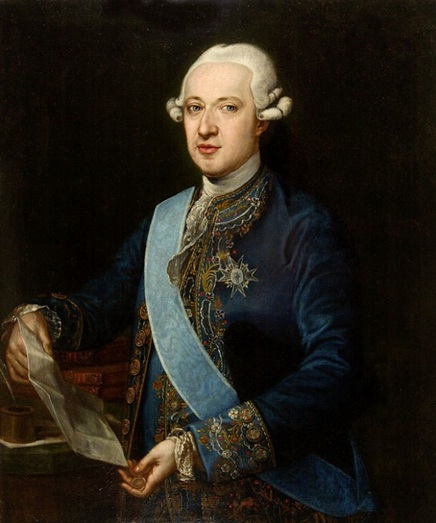
Another proof of the great importance of this family is that it got related to the County of Floridablanca, which was originated by Don José Moñino Redondo, later I Count of Floridablanca, one of the most important politicians of this time, secretary of state of King Charles III, and later on, of his son, Charles IV. 


Probably by Francisco de Goya (1746-1828) [Public domain],
via Wikimedia Commons

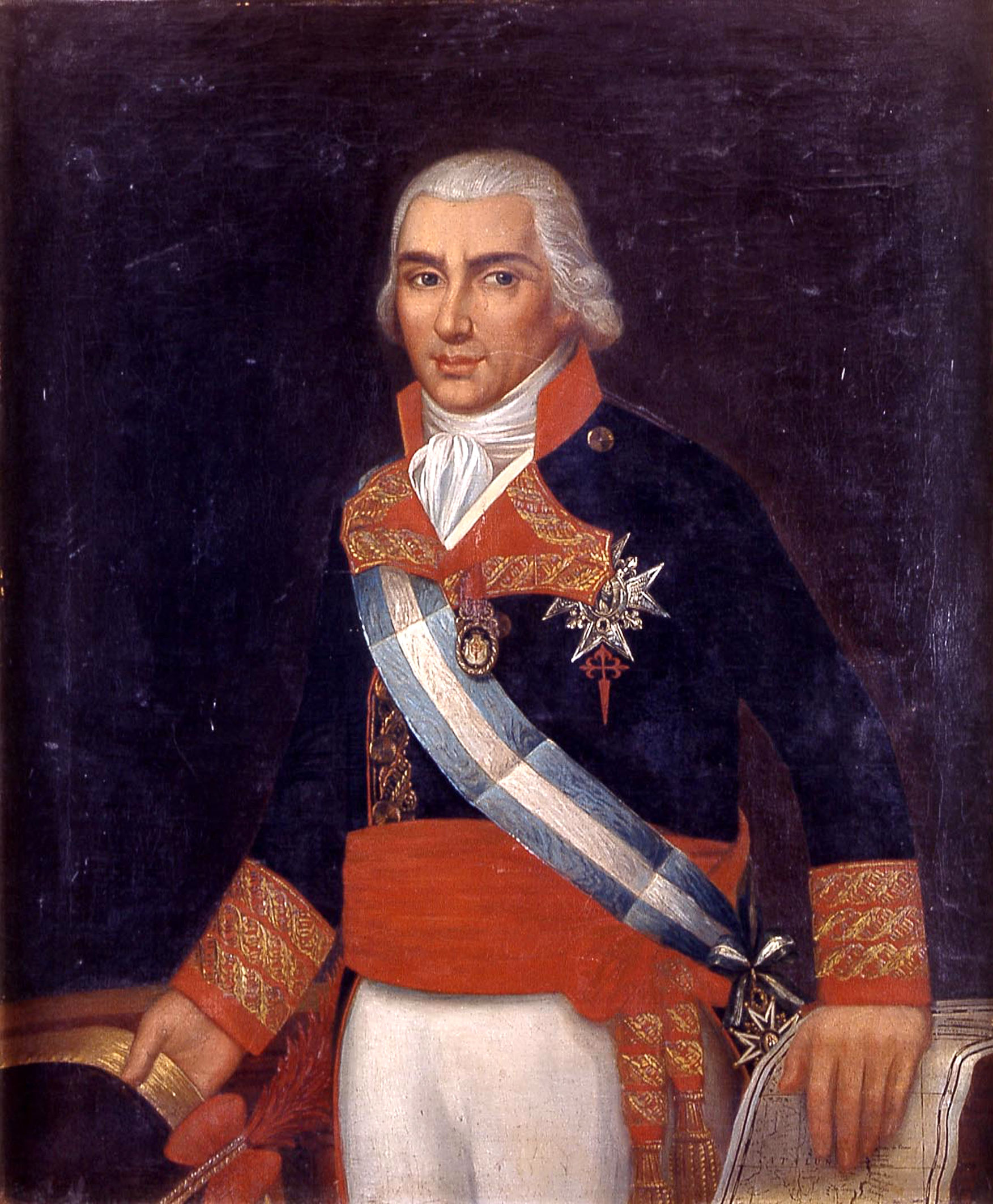
We also have the case of Juan Pedro Coronado Wittemberg, another member of this family, which fought alongside with Francisco Gravina, navy commander in chief around 1810.


See page for author [CC BY-SA 3.0 (http://creativecommons.org/licenses/by-sa/3.0)
or Public domain], via Wikimedia Commons

Thank you


If you want to write me o comment your points
of view you can do it in the following email: 


email Daniel Piedrabuena Ruiz-Tagle


The family Lisperguer Wittemberg split in two continents America (Perú, Chile and Argentina) and Europe (mainly Spain). If you are interested in the 18th century Spain, this is the work that you may consider: Los Lísperguer Wittemberg: una familia alemana en el corazón de la cultura chilena: Identidad y esplendor de la primera familia colonial de Chile. Despite the title, 60 % of this work has to do to 18th century Spain. 


I have also published a second volume focused in the 16th century Spain, fascinating too if you are studying the Spanish Empire or the Holy Roman Empire. The title is "El conquistador alemán Pedro Lisperguer Wittemberg: De cortesano de Carlos V y Felipe II a célebre conquistador de Chile"  and is available in several retailers in its digital version. Thank you. DPR.


Very recently I have also written an article about the origin of the Lisperguer family in the Atenea magazine. To read the article click here: 


The origin of Lisperguer family


Daniel Piedrabuena Ruiz-Tagle 

Don´t forget to leave your comment !!!

Thank you


Further recommended reading: 


THE LISPERGUER VOLUMES: LEGACY, REVIEWS AND PERSPECTIVES


martes, 19 de abril de 2016

El pasado alemán del marqués de Valdeflores

Luis José Velázquez de Velasco, marqués de Valdeflores (1722-1772).
Cuadro pintado por Enrique Jaraba en 1920. Se trata de un luneto adosado
al techo del Salón de Recepciones del Ayuntamiento de Málaga, al cual
el cuadro pertenece. 
      Como es bien conocido el marqués de Valdeflores fue una figura icónica de la Ilustración española. Lector desde su más tierna infancia, en su juventud realizó estudios jurídicos, filosóficos y escolásticos logrando una gran erudición. En 1752 viajó a Madrid, contactó con Ignacio Luzán, quien lo introdujo en la Real Academia de la Historia. Fue uno de los más jóvenes que realizó un viaje por Península Ibérica para catalogar sus antigüedades. También uno de los primeros que introdujo el neoclasicismo en España. 

      Hoy podríamos definir a Valdeflores como un polymath: fue un historiador, literato, poeta, latinista, arqueólogo, anticuario, epigrafista, numismático, académico...Todo ello ha sido estudiado por muchos historiadores y académicos y no queda ninguna duda al respecto. Sin embargo, lo que es una gran novedad es el pasado alemán de Luis José, lo que abre un gran pórtico para una nueva interpretación de su figura.

Efectivamente, se sabe que por parte de padre el marqués pertenecía a las familias más linajudas de Málaga y de toda Andalucía. Pero por parte de madre descendía de la familia Wittemberg, una familia alemana que se había establecido en Málaga como comerciantes en el último tercio del siglo XVII. El bisabuelo del erudito andaluz se llamaba Johannes Wittemberg Dreyers y vino en torno a 1667 a Málaga, contando sólo con 14 años de edad, al cuidado de Rodrigo Elers, cónsul en Málaga por S.M. de las ciudades hanseáticas y provincias obedientes de Flandes. Johannes pronto se independizó de su curador y formó su propia compañía marítima, dedicándose al tráfico internacional de mercancías, al parecer como un factor de sus socios en Hamburgo. 

   Poco después Johannes se casaba con María Arizón, que procedía de un matrimonio mixto (Arizón procedía de Irlanda y se latinizó a partir de Harrison). De esta unión nació entre otros hijos María Wittemberg Arizón, nacida en Málaga el 8 de junio de 1674, casada el 3 de julio de 1701 con don Alonso Cruzado Zatico, regidor perpetuo de Málaga, nacido el 14 de enero de 1677. A su vez de este matrimonio nació entre otros doña Margarita Cruzado Wittemberg, bautizada en Málaga el 16 de diciembre de 1705, casada el 19 de noviembre de de 1721 con don Francisco Pascual Zacarías Velázquez de Angulo y Rentero, capitán de milicias y regidor de Málaga, entre otros muchos cargos y títulos, como es el de I marqués de Valdeflores y Señor de Sierra Blanca. A su vez de esta unión procede nuestro ilustre biografiado, Luis José Velázquez de Velasco, II marqués de Valdeflores (1722-1772).

  La relación de Luis José con la familia Wittemberg fue mucho más que genealógica. No sólo su madre fue una Wittemberg, sino que su hermano menor Francisco contrajo matrimonio con otra Wittemberg, su prima doña Juana Wittemberg Cotrina, de cuya unión procede una de las familias más ricas de toda Córdoba en el siglo XIX. Asimismo, existen evidencias que sugieren que Luis José mantuvo en su juventud una gran proximidad con su tío Juan Joseph Wittemberg Aguilar, racionero (según otras fuentes dean) de la catedral de Málaga. No sólo entre sus escritos se han encontrado papeles de su tío, sino que mantuvo con él una comunicación epistolar durante años, intercambiando numerosas cuestiones filosóficas y de historia natural y debatiendo ideas científicas, como la cuestión de la refracción de los rayos de la luz.

   Asimismo, se conserva correspondencia de Luis José con otro de sus tíos, don Joseph Wittemberg Aguilar, hermano del anterior y por entonces propietarios de una de las más prósperas compañías marítimas de Málaga.

    En el campo de las realizaciones intelectuales resulta paradójico pensar, que desconociendo su origen, la figura de Luis Joseph Velázquez provocó una estimable seducción entre los círculos intelectuales alemanes. Tras la publicación en 1755 de sus Orígenes de la poesía castellana, la obra tuvo una inmediata repercusión internacional. Desde luego se sabe cómo Velázquez era leído en Leipzig. Su obra aún cobró mucho más interés tras la traducción que hizo el profesor Johan Andreas Dieze en Gottingen en 1769 con el título de Geschichte der Spanischen Dichtung.

Un siglo después de la muerte de Velázquez, Emil Hübner, miembro de la Academia Imperial de Berlín, utilizó las colecciones epigráficas del erudito andaluz para conformar el volumen II de su Corpus Inscriptionum Latinarum dedicado a Hispania. Todo esto indica que si en estos foros intelectuales alemanes hubieran tenido conocimiento del pasado alemán de Velázquez, el interés por su obra hubiera sido, si cabe, aún mucho mayor.

     Para poder comprender en profundidad la enorme entidad de la familia Wittemberg en Málaga y la importancia de sus operaciones comerciales, sus casamientos, etc, resulta imperativo leerse el libro que acabo de publicar "Los Lisperguer Wittemberg: una familia alemana en el corazón de la cultura chilena: Identidad y esplendor de la primera familia colonial de Chile".


A pesar de su título esta obra tiene muchísimos presupuestos españoles, fuentes y escenarios situados en España.

Para acceder al libro disponible en Amazon pulse aquí:

Los Lisperguer Wittemberg: una familia alemana en el corazón de la cultura chilena

Asimismo he publicado un artículo en la prestigiosa Revista Atenea que puedes leer en el siguiente enlace: 


Asímismo he escrito un libro muy documentado sobre la etapa pre-americana del célebre conquistador alemán Pedro Lísperguer. Para adquirirlo haz clic en el siguiente enlace: 


El conquistador Pedro Lísperguer


         Muchas gracias por tu interés y no dejes de comentar. 

Daniel Piedrabuena Ruiz-Tagle


jueves, 30 de enero de 2014

New research about the German Conqueror Pedro Lisperguer and La Quintrala


National Library of Spain, Madrid. By Edmund Gall (2013-04 Spain 081)
[CC BY-SA 2.0  (http://creativecommons.org/licenses/by-sa/2.0)],
via Wikimedia Commons


Dear friends, lovers of  history: 

     I am a researcher of the National Library, Royal Academy of History, National Archives, and many other institutions in Spain, and I write to you concerning the following matter:

  I have been about a decade researching and studying the background of Peter Lisperg, a German conqueror in Chile, born in Worms in 1530, son of Peter Birlinger and Katharine Lisperg. There is no doubt that in Chile and Peru the Lisperguer family has achieved enormous success, considered by many historians the first family of this beautiful region of the world. Granddaughter of Peter Lisperg was Catalina de los Ríos Lisperguer, called “La Quintrala,” whose life constitutes the second literary topic of Chile nowadays, behind the great national landmark, La Araucana, of Alonso de Ercilla. This overwhelming success has attracted many scholars, universities, and public who have made an incredible attempt to solve the question of the origin of Peter Lisperg. The fact that in Chile Lisperg is believed to be descendant of the duchy of Saxony has spread his legend considerably. However, despite all of this enthusiasm until now has been impossible to trace the past of the famous conqueror. 

   Thanks to new evidence and documents found in Spain, it has been possible to go further into his background and family in Germany, his education in Spain, the traits of his personality, his political environment, shedding an overall new light over his figure. For the first time, a precise itinerary of the journey of Lisperg through The Low Countries, accompanying the emperor Charles V, and the Count of Feria has been laid out. This journey lasted for six months, in which Lisperg met the most important personalities in the empire and visited important cities like Bruges, Brussels, Antwerp, Leiden, and Utrecht. Also has been very interesting to revive with accuracy his living in Andalusia-Spain, where he stood for a decade (1545-1555) under two influences, the marquisate of Priego, with its geopolitical center in the city of Montilla (Córdoba) and the county of Feria, with its political headquarters in the city of Zafra (Badajoz). In the first years of his stay in Spain he was under the patronage of Pedro Fernández de Córdova, IV Count of Feria, Grandee of Spain, until his death in 1552. Therefore all circumstances of his living in Andalusia have been examined in detail. Essential too, has been to unfold the historical merits and greatness of the House of Feria and Priego, highlighting the main hero at that time, don Gonzalo Fernández de Córdova, The great Captain, the conqueror of Italy, between many other fascinating subjects.

   After the death of Pedro Fernández de Córdova in 1552, the county of Feria was inherited by his brother Don Gómez Suarez de Figueroa, V Count of Feria, Grandee of Spain. Protocols found in Spain prove how Peter Lisperg continued in Andalusia for a year under the protection of Gómez Suárez, with whom he traveled in July 1553 to London to attend the wedding of Philip II and Mary Tudor in 1554. He remained there for seven months with the most important knights, and nobility of England, Spain and the empire. The Count of Feria was the ambassador of Philip in England, a member of his council of state, and one of the most prominent politicians of Philip’s reign, in direct relationship with the Duke of Alba, Ruy Gómes and many others. After his experience in England, Lisperg returned to Spain with other courtiers. Anew in Andalusia, he obtained many licenses and protocols to allow his traveling to the New World. One of them was given directly by the emperor in Brussels, and all of this has been studied carefully. Later on, he embarked to the Indies, in San Lucar de Barrameda, Cádiz, in October 1555, with the viceroy Andrés Hurtado de Mendoza and has been very interesting to revive his rough crossing of the Atlantic Ocean, his arrival to the continent and crossing of the itsmo of Panama.

   But the primary purpose of this book has not been to describe the adventures and remarkable role of Peter Lisperg in Chile and Peru, because about this exists abundant literature. The main aim of this project has been to find out the origin of the family. New documents found in Spain have shown that a flourishing German family called Wittemberg, was established too in the peninsula. These documents reveal how the Lisperg and Wittemberg were linked, belonging to the same family. If the first chapter is dedicated to the education of Lisperg in Europe, the goal of the second chapter is to solve the challenging puzzle of setting the background of the family. To accomplish this objective, I have weighted the status of the family in the New World, gathering all possible information from the South American sources. But especially important has been to observe the nobility status of the Wittemberg´s in Spain. Thanks to many manuscripts completely unpublished up to now, it has been possible to know from which counties and duchies did the family come from in Germany, analyzing as well the coat of arms described in those documents. New evidence and statements of the Wittemberg’s brothers in Spain suggest that the family came from the Duchy of Württemberg. Nevertheless, I have also had a close collaboration with the Stadtarchiv of Worms, as a way to enhance what it is known about the Lispergs in this area.

     However, there are still many questions without an easy answer. If that noble status was so evident why did the Wittembergs incurred in some contradictions? What was the value at that time of those certificates of nobility enacted by these experts in international heraldry? What was the standard of living of the Wittemberg family in Andalusia? Were they merchants? Jews perhaps? Why did Peter Lisperg take the name of his mother, “Lisperg,” and some of his descendants use the traditional of “Wittemberg”? All these questions have been carefully assessed approaching the reader to the real nature of the family. Consultations to the regional archives of Saxony and Württemberg were unavoidable. To try to comprehend the dichotomy of the origin between Saxony and Württemberg, I have gathered all possible information in South America and Spain. At stake was the idiosyncrasy of the family. Interesting has been to check the family way of living in South America, their marriages, their bounding to nobles titles, their military careers, and prominent posts in this aristocratic society. But if the noble status of Peter Lisperg was so manifest, why did he marry an indigenous woman in Chile? All these facts and other paradoxes have been the delight of historians and sociologists for decades and for the first time have been deeply studied, giving proves which permit to discard the Jew background of the family completely and at the same time allow to go ahead in our comprehension of these mixed-race lineages of America, establishing parallels with similar families, who despite their exotic blood have attained an enormous success in those societies.

  The third chapter describes the development of the Wittemberg family in Spain. The story begins with the arrival of Johannes Wittemberg Dreyers to Spain in 1668, being a representative of Hanseatic merchants in Hamburg. Later on, he created his own shipping company with a German partner, achieving an immense commercial success for 130 years. Very interesting has been to analyze all the transactions and connections undertaken by the family in Spain and the destinations of their ships, mainly to the Baltic ports of the North of Europe. The evolution of the company has also been examined, knowing in detail all its members, among them many foreign consuls who have shared interests with the Wittemberg family. Through the study of its staff and partners, its businesses, and many records found in Spain have been possible to trace the background of the family in Hamburg.

   Through the study of their many testaments, partitions of goods, protocols of all kind, it has been possible to construct the genealogy of the family in Spain, their high rank marriages with many members of the nobility, enabling their members to occupy critical positions in the Spanish government, in the army, in the clergy. It is an absorbing story of an intelligent foreign clan, who in few years took control of the land, owning large country farms with beautiful mansions, where they cultivated all sort of crops, especially wine, a product they massively exported abroad. It is an ambitious inquiry which offers a new scope of this important German family, revealing their huge achievements, their marriages with grandees, their high style of life, the refinement of their furniture, silver dishes, silky clothes, and many delicate objects. It is a magnificent work, which illustrates the high standard of living of the family, how they played musical instruments, owned elegant carriages with their coat of arms printed on them, sent their sons to study in universities, becoming some of them lawyers, holding an immense power and recognition, creating truly prominent aristocratic dynasties in the Spanish eighteenth-century society.

   Member of this German family by his mother side was also Luis Joseph Velázquez de Velasco, Marquis of Valdeflores (1722-1772), member of the Royal Academy of History, a key figure in the early Spanish Enlightenment, whose “Geschichte der Spanischen Dichtung” was translated in 1769 by professor Andreas Dieze in Gottingen, and in 1860 Emil Hübner, member of the Die Königlich Preussische Akademie der Wissenschaften zu Berlin, took advantage of the many epigraphic gatherings of Valdeflores to form The Corpus Inscriptionum Latinarum. Velázquez, well educated and a member of many academies, was involved in the most important literary movements and cultural projects of that time. He is known to be the first who introduced the neoclassicism in Spain, and one of the youngest who undertook scientific journey through the peninsula to gather their antiquities.

            In conclusion this is an insightful work which compiles all facts concerning this wealthy German family, the clever Lisperguer Wittembergs, who did not only adapt themselves in advantageous terms to a foreign land, but they occupied the first posts of these societies, contracting the very best imaginable marriages, deriving from this family several nobles titles, who embody the mainstream of achievement in Spain and South America. The work is also enriched with several appendixes: a complete genealogy of the Wittemberg family in Spain, an important certificate of their nobility, a full chronology of Peter Lisperg, a compilation of all his licenses to embark to Chile and Peru, and a well-done genealogy of the Lisperguer family in South America.

 It is also interesting to say that at this very moment, “La Quintrala” and the Lisperg family is on the stage at the National Theater of Chile, and a good performance of their lives are permanently appearing in a TV series, novels, articles, even operas. In conclusion, the work that I present to the public at this moment, represents a real breakthrough in research terms, and I am sure it will be the genesis of many cultural initiatives in Chile, Spain and Germany, and any other country. 

                                                               Yours truly,

                                     Daniel Piedrabuena Ruiz-Tagle

Please don´t forget to comment or email me. 


P.D. Dear Readers:


The title of the book has changed. It has been divided into two volumes. The first one called "El conquistador alemán Pedro Lisperguer Wittemberg: De cortesano de Carlos V y Felipe II a célebre precursor de Chile," is available on Amazon in its digital version. Thank you. DPR.


Very recently I have also written an article about the origin of the Lisperguer family in the Atenea magazine. To read the article click here: 


The origin of Lisperguer family


I have also published a second book concerning this interesting matter: Los Lísperguer Wittemberg: una familia alemana en el corazón de la cultura chilena: Identidad y esplendor de la primera familia colonial de Chile. 


You can have it at the following link: 


Daniel Piedrabuena Ruiz-Tagle 


Don´t forget to leave your comment !!!

Thank you


.